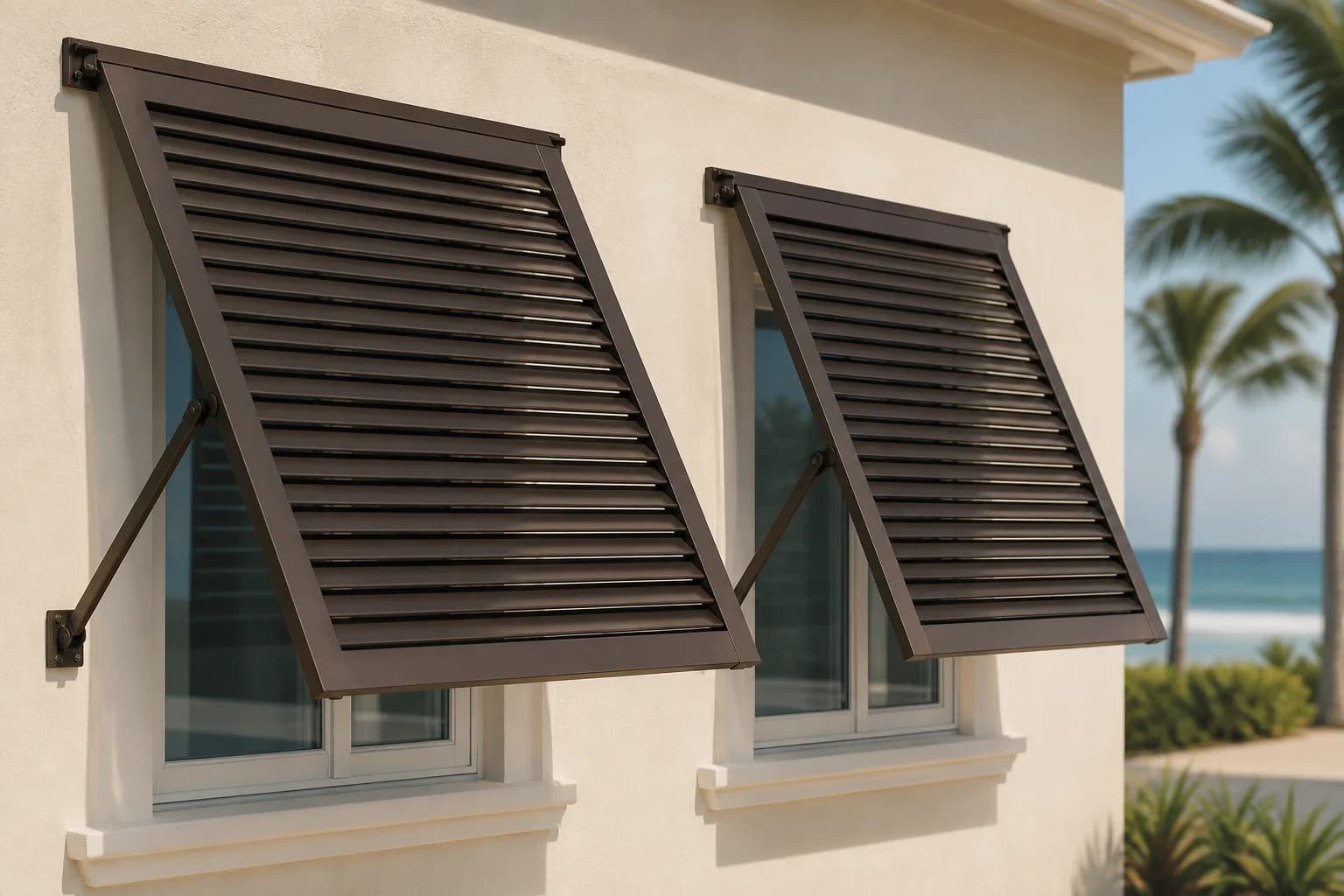
Bahama shutters
Bahama shutters hinge at the top and project outward on arms. They can provide daily shade, partial privacy, and a distinctive coastal appearance while remaining in front of the opening.
Traditional side-hinged shutters
Louvered, paneled, or board-and-batten shutters hinge at the sides and rest against the wall when open. Operable pairs can close over the opening when sized and mounted correctly.
Clearance and daily use
Bahama projection affects views, head clearance, egress, cleaning, window access, and arm placement. Side-hinged panels need wall space, throw, holdbacks, center meeting, latches, and clearance from trim and fixtures.
Verify any performance claim
Either style may be decorative or part of an approved system. Wind or impact performance depends on the exact model, dimensions, material, frame, hardware, fasteners, substrate, engineering, and installation.
Turn the guide into a complete opening schedule.
Keep every finished width and height, mounting surface, jamb depth, panel arrangement, material, finish, hardware part, photo, and delivery note connected to the same opening ID.
Start the configurationQuestions about this topic
Do Bahama shutters provide more shade than side-hinged shutters?
When held open above the window, Bahama shutters can provide ongoing shade. Side-hinged shutters generally sit beside the opening when open and provide shade only when partly or fully closed.