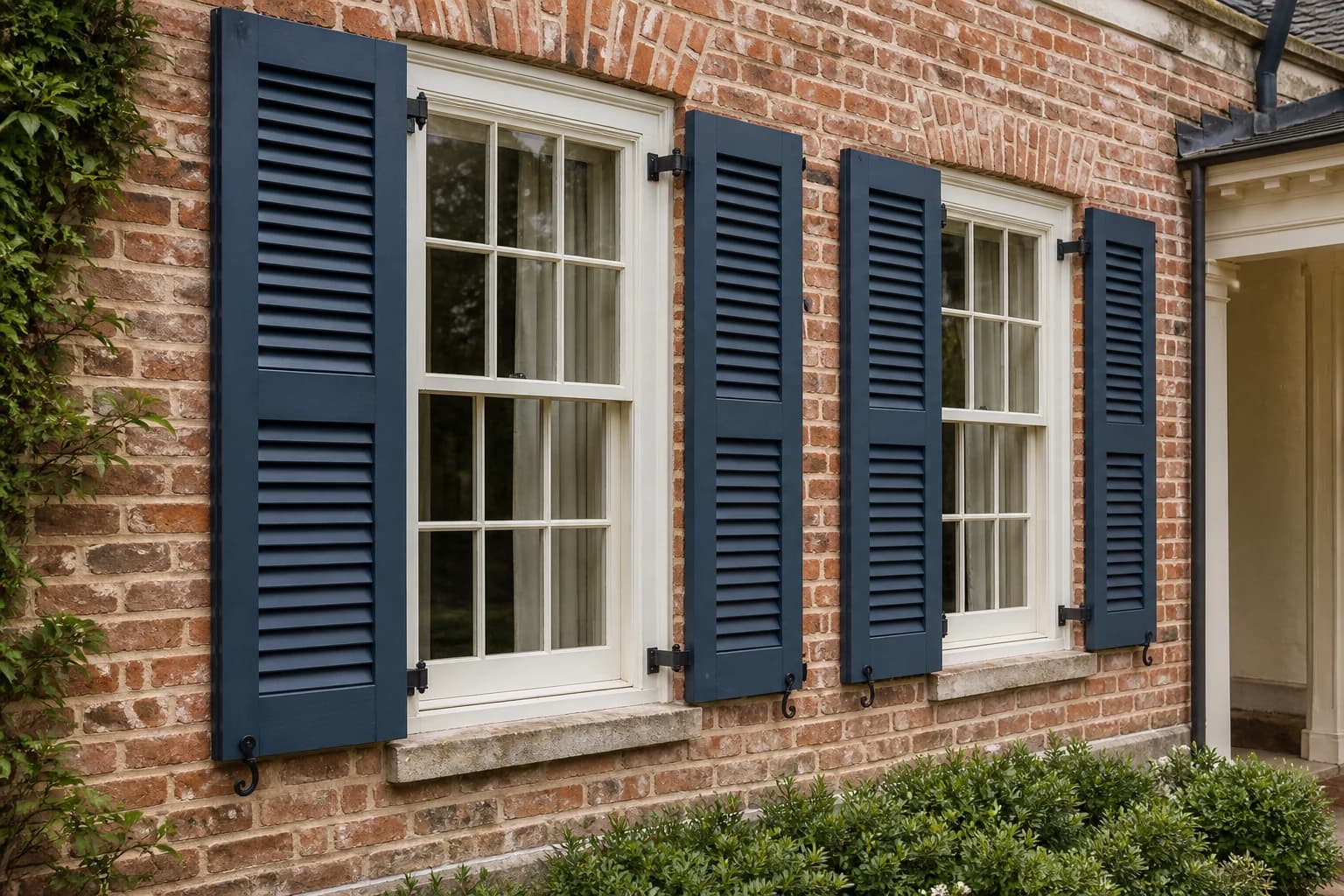
Confirm the mounting design
Verify the opening ID, shutter pair, left and right orientation, top and bottom, hinge or fixed mount, facade, stand-off, fastener type, embedment, sill, trim, drainage, and any engineering requirements before work starts.
Protect the building envelope
Fasteners must reach appropriate structure without creating an uncontrolled water path. Flashing, drainage planes, sealants, masonry anchors, siding blocks, and dissimilar materials require project-specific care. Decorative mounting hardware is not a substitute for structural attachment.
Set clearances before final fastening
Operable panels need consistent gaps at the head, sill, sides, and meeting stiles, plus enough hinge throw to clear trim or siding. Open panels must sit safely against the wall and engage holdbacks without stress.
Test every position
Open, close, latch, and secure the shutters. Check fasteners, hinge pins, holdbacks, rattling, rub points, facade contact, window operation, egress, and maintenance access. Recheck after the building materials have moved through weather cycles.
Turn the guide into a complete opening schedule.
Keep every finished width and height, mounting surface, jamb depth, panel arrangement, material, finish, hardware part, photo, and delivery note connected to the same opening ID.
Start the configurationQuestions about this topic
Can exterior shutters be screwed directly through siding?
Only when the selected fastener and mounting detail reach appropriate backing and preserve the wall assembly. Siding type, stand-off, drainage, loads, and manufacturer instructions determine the detail.