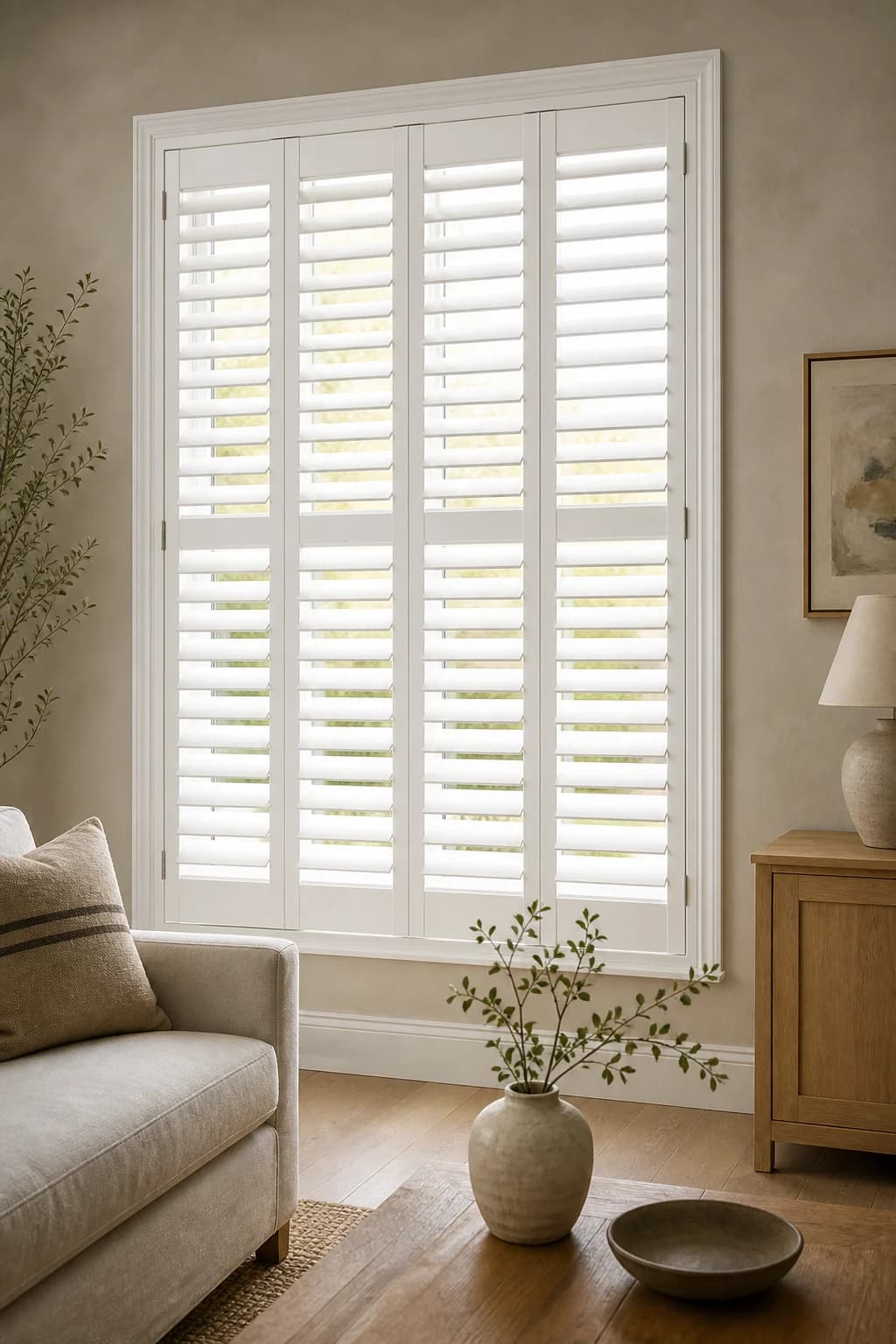
Smaller louvers read more traditional
Narrower louvers create more horizontal lines and may suit smaller openings or traditional rooms. They can offer finer visual texture but use more slats and may provide a narrower view between louvers at the same angle.
Larger louvers open the view
Wider louvers can look cleaner on large windows and allow broader views when open. They also require sufficient jamb depth, panel thickness, clearance from glass and handles, and compatible frame and tilt-control details.
Divider rails change control
A divider rail can separate upper and lower louver banks so privacy and light change independently. Align the rail to a window meeting rail or a deliberate room sightline rather than placing it by habit.
Test a sample in the room
Compare physical samples against the trim, window size, viewing distance, daylight, wall color, furniture, and desired privacy. Screen colors, neighboring buildings, and nighttime lighting can alter how open louvers feel.
Turn the guide into a complete opening schedule.
Keep every finished width and height, mounting surface, jamb depth, panel arrangement, material, finish, hardware part, photo, and delivery note connected to the same opening ID.
Start the configurationQuestions about this topic
Are larger plantation-shutter louvers always better?
No. They can improve view and simplify the look, but opening size, jamb depth, hardware clearance, privacy, architecture, and personal preference should decide.